Detect and Stop Linux Host Compromise in Minutes
Open-source eBPF-powered agent catches threats from initial access to lateral movement — without heavy agents and without sending telemetry to someone else's cloud. 20+ built-in detection rules, one-click response, built-in AI analyst for automatic alert triage, 100% self-hosted.
15 min demo · We show detection, investigation, and response on a live Linux host.
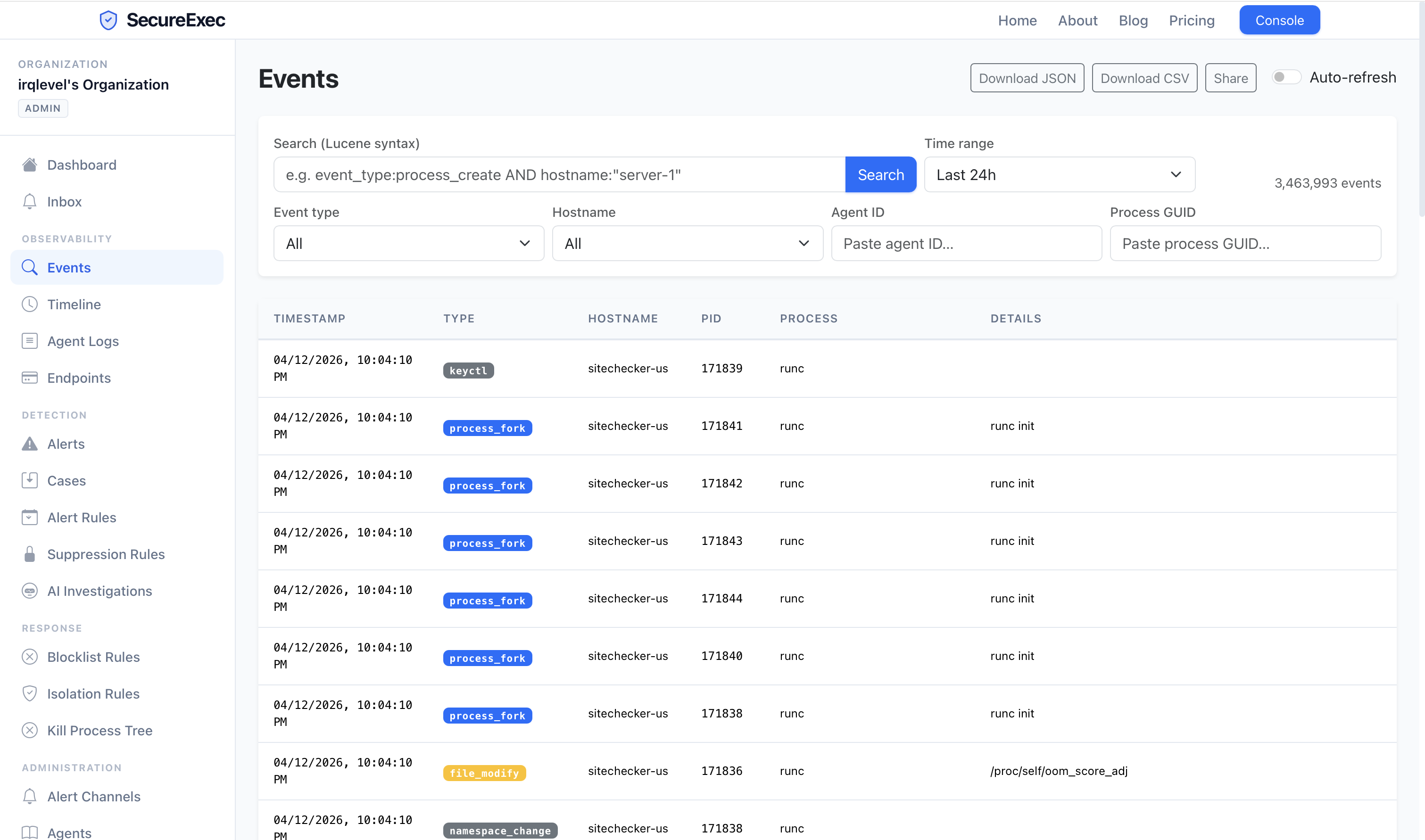
Built for Real Attack Scenarios
From SSH brute-force to full host compromise — detect, investigate, and respond.
Catch Reverse Shells
Detect bash/sh spawning outbound connections — the #1 post-exploitation technique. Alert fires in under 100ms.
Stop SSH Brute-Force
Stateful detection of repeated auth failures. See source IP, username, and timing — isolate the host in one click.
Monitor Critical Files
Track writes to /etc/passwd, /etc/shadow, cron dirs, and SSH authorized_keys. Know who changed what and when.
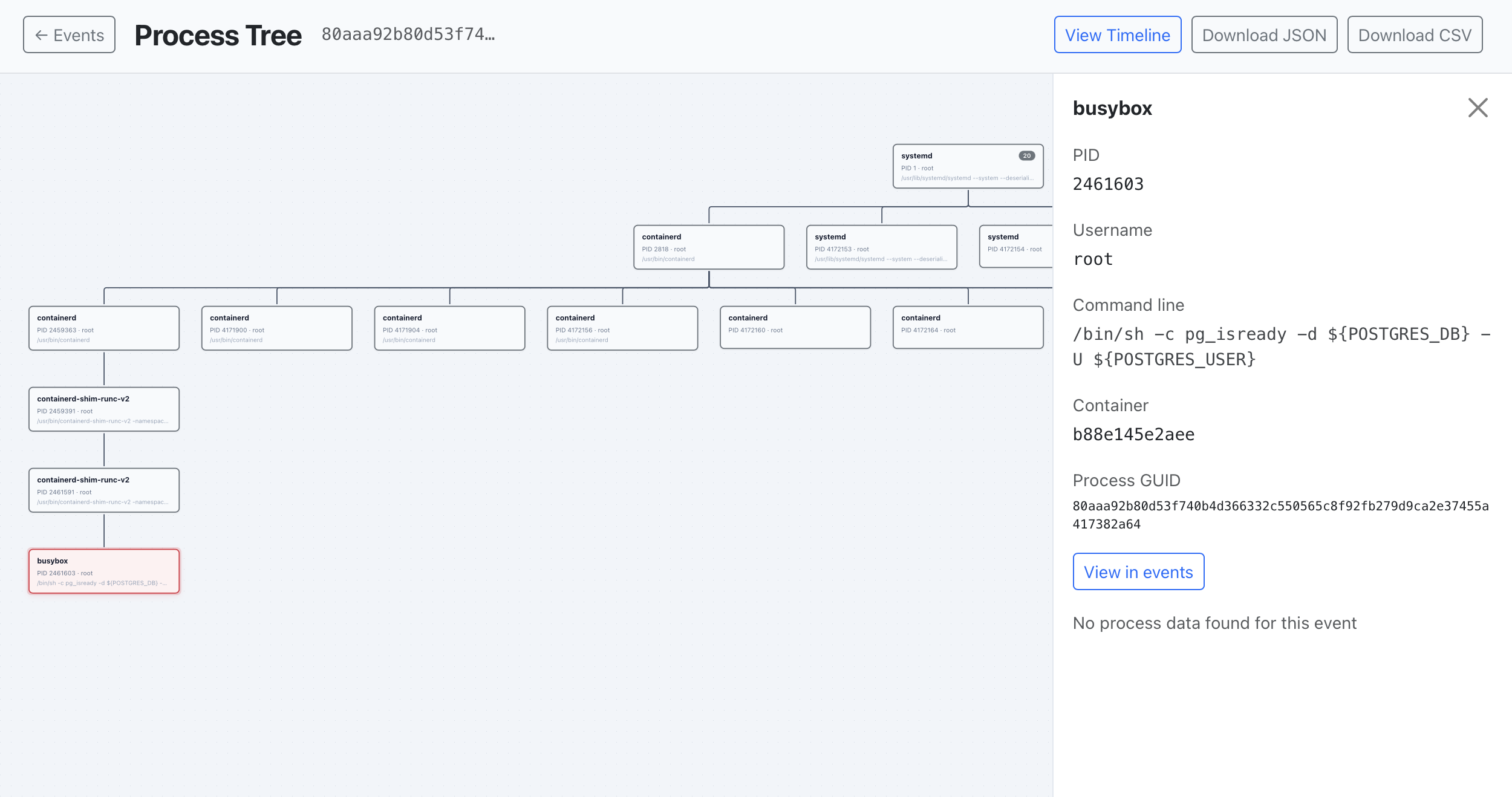
Investigate the Full Attack Chain
From any alert, expand the full process tree: see how the attacker got in and what they touched next.
Contain Incidents in Seconds
One-click network isolation + process tree kill. Stop the attack without SSH-ing into the box.
Detect and Respond — Not Just Detection
Most open-source tools stop at collecting events. SecureExec closes the loop.
When a threat is detected, your team can isolate the host, kill the process tree, or block the executable — all from the web console. No SSH, no manual intervention.
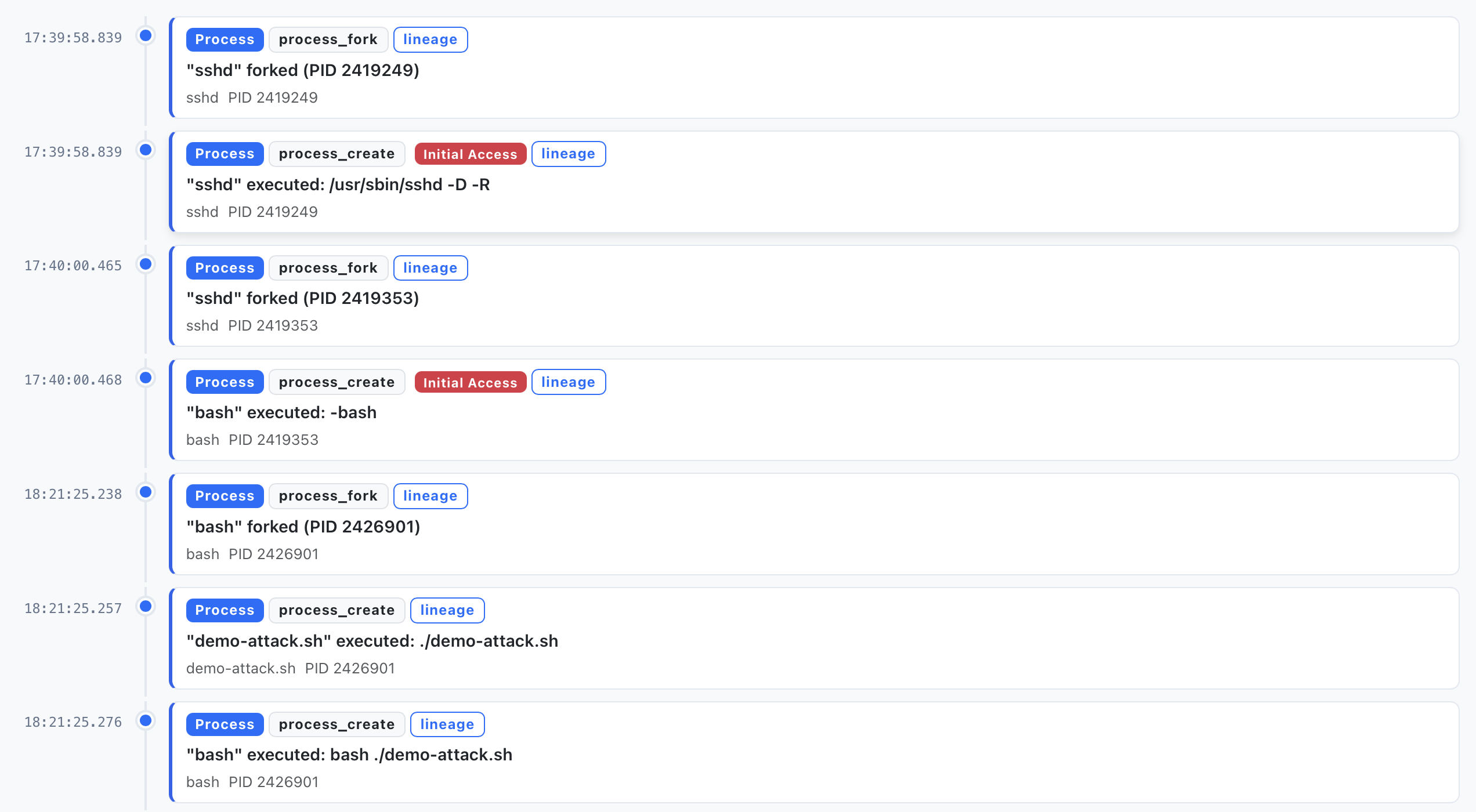
From Alert to Full Attack Story
SSH brute-force, initial access, payload download, persistence, C2 — see the entire incident as a chronological narrative, not raw events. Expandable timeline entries show process context, file changes, and network connections. Phase labels (Initial Access, Persistence, C2) are assigned automatically.
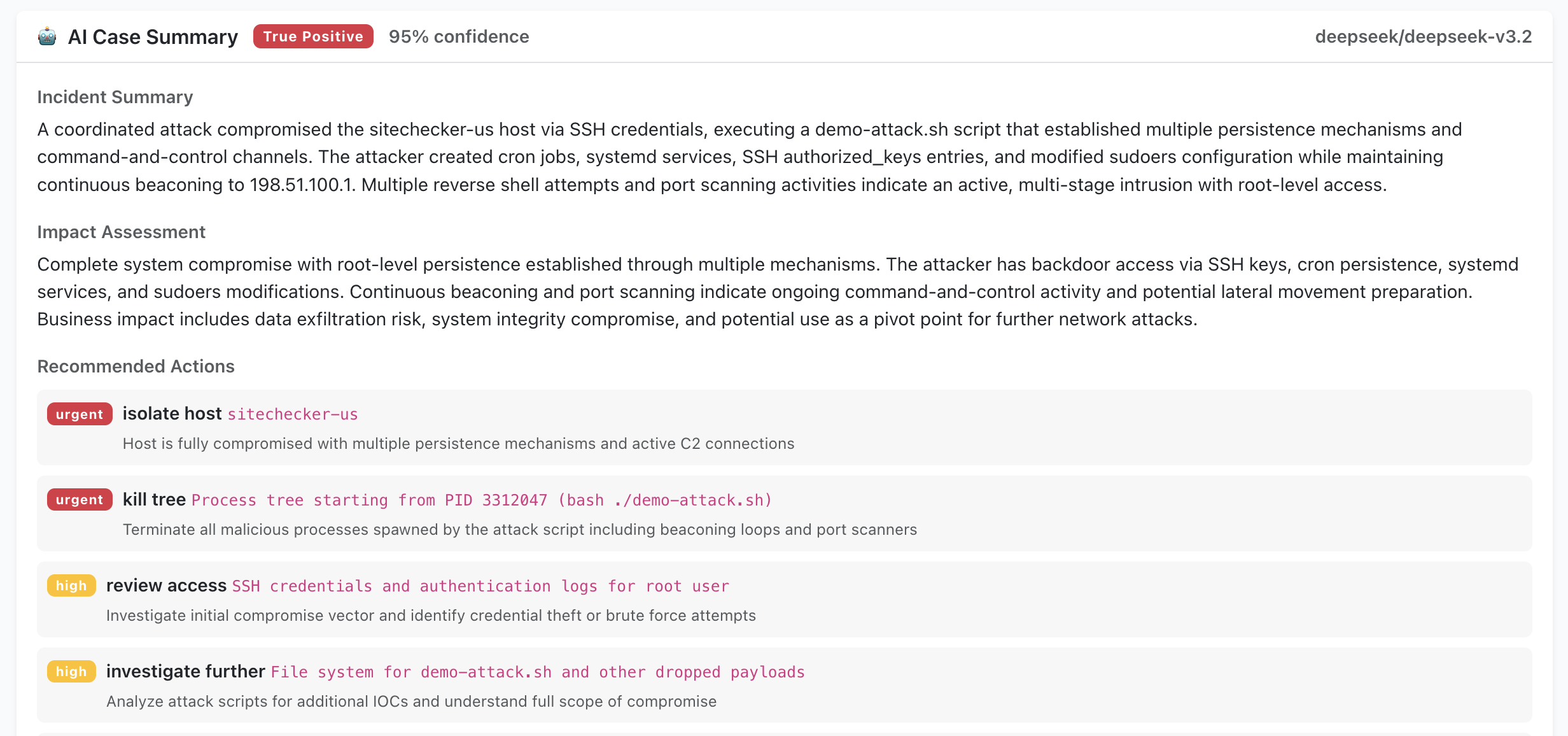
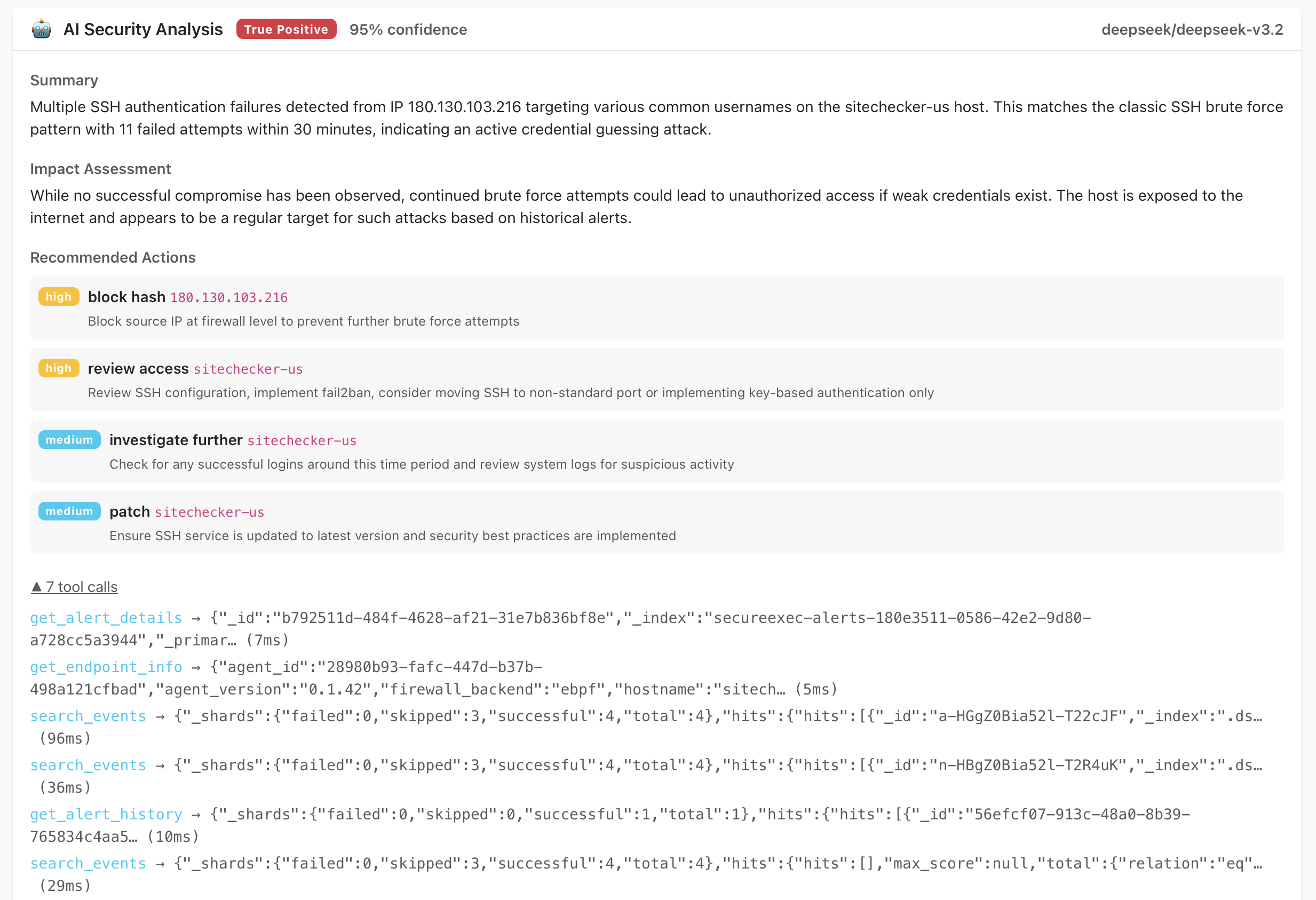
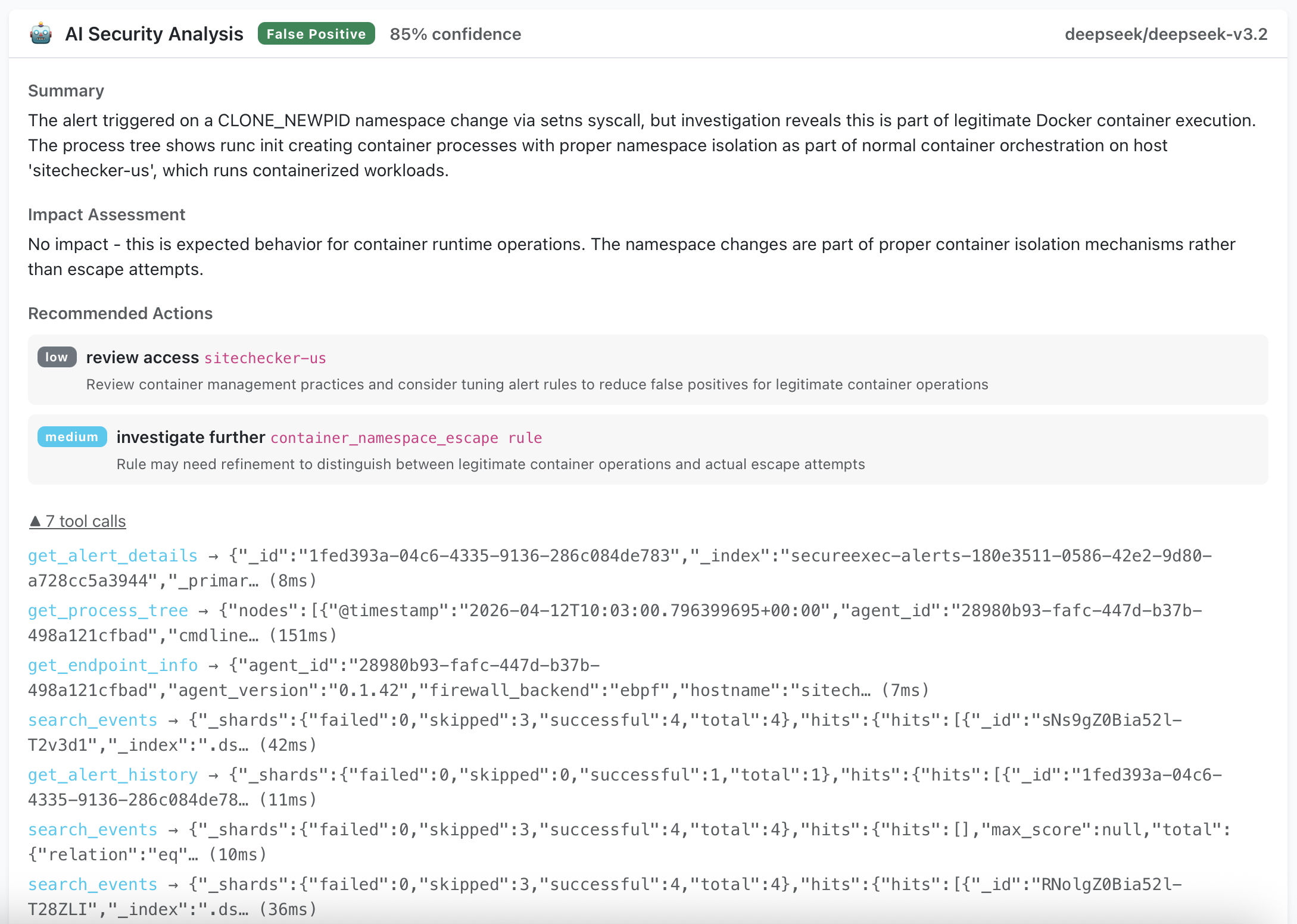
AI Security Analyst — Your Built-In SOC Teammate
An LLM-powered agent that investigates alerts the way a senior analyst would — gathering evidence, building context, and delivering a verdict. Works with any OpenAI-compatible provider: OpenRouter, Ollama, vLLM, or direct API.
No dedicated SOC? No problem. The AI analyst triages alerts automatically: checks the process tree, correlates events across the host, queries endpoint details and alert history — and produces an evidence-backed investigation report with a confidence score and recommended response actions. Auto-triage mode investigates every new alert above your configured severity threshold.
How It Works
From kernel hook to actionable alert in under 100ms.
eBPF Hooks
Kernel-level tracepoints and kprobes capture syscalls — process exec, file ops, connect(), DNS queries.
Rust Agent
Events are enriched with process context, container ID, and username, then streamed via gRPC.
Detection Engine
20+ built-in rules evaluate every event. Custom rules supported via Starlark scripting.
Search & Investigate
Events are indexed and searchable. Process tree, full-text search, and alert investigation in the web console.
Built-in Detection Rules
Production-ready rules that fire on real threats. Tuned to minimize false positives with process context and allowlists.
SSH Brute-Force
Stateful detection of repeated SSH failures from the same source IP within a time window, with cooldown logic.
Reverse Shell
Catches shell processes (bash, sh, zsh) making outbound network connections — the #1 post-exploitation technique.
Privilege Escalation to Root
Detects UID changes to root from non-root processes, excluding known system services.
Container Namespace Escape
Flags suspicious unshare/setns calls with user, PID, or mount namespace flags from unexpected processes.
Fileless Execution
Detects memfd_create usage — the primary vector for fileless malware on Linux.
Cron Persistence
Alerts on new cron job creation in /etc/cron.* and /var/spool/cron/ by non-system processes.
Crypto Miner
Detects miner process names, stratum protocol patterns in command lines, mining pool ports, and known pool DNS queries.
Ransomware
Alerts on ransom note creation, file renames to encrypted extensions, mass file renaming, and backup wipe commands.
SSH Authorized Keys Tampering
Alerts on writes to any .ssh/authorized_keys file by processes other than ssh-copy-id.
Process Injection
Detects cross-process memory writes via process_vm_writev — used by injection tools to write shellcode into other processes.
From Alert to Attack Graph in One Click
When an alert fires, click "Process Tree" to see the full execution chain — ancestors, children, and correlated security events — in an interactive visual graph. IOC enrichment automatically discovers other processes that touched the same IPs, DNS names, or files, turning lineage into a true attack graph. Cut investigation time from 30 minutes to under 2.
Learn about Process TreeBuilt for Linux Security Teams
Everything you need to detect, investigate, and respond to threats on Linux servers.
eBPF-Powered Collection
Kernel-level visibility via eBPF — capture process exec, file operations, network connections, and DNS queries with zero blind spots and near-zero overhead.
20+ Built-in Detection Rules
Ready-to-use rules for SSH brute-force, reverse shells, privilege escalation, container escape, fileless malware, and persistence techniques.
Process Tree & IOC Graph
One-click interactive graph from any alert — see the full parent-child chain, correlated events, and IOC-enriched attack graph with auto-discovered related processes.
100% Self-Hosted
Full Docker Compose deployment on your infrastructure. Your event data never leaves your servers. Air-gapped deployments supported.
Full-Text Event Search
Every event is indexed — instant full-text search across millions of events with configurable retention policies.
Lightweight Rust Agent
Single binary, zero dependencies. Under 1% CPU and minimal memory usage on production servers — deploys in 60 seconds.
Deploys Safely on Production Linux
Open Source Agent — Nothing to Hide
The SecureExec agent runs on your servers with root privileges. You deserve to see exactly what it does. The full agent source code is publicly available under the Apache 2.0 license.
Why Not Just Use What You Know?
Every team asks: why not Wazuh, CrowdStrike, or auditd? Here's the honest answer.
SecureExec | Wazuh | CrowdStrike / S1 | auditd + osquery | |
|---|---|---|---|---|
| eBPF kernel visibility | ||||
| Built-in detection rules | ||||
| Process tree visualization | ||||
| Host isolation (1 click) | ||||
| Block by hash / path | ||||
| Self-hosted & air-gapped | ||||
| Agent < 1% CPU | ||||
| Open-source agent | ||||
| Transparent pricing |
Built for teams who need real response capabilities, not just log forwarding.
What You'll See in a 15-Minute Demo
Not a slide deck. A live walkthrough on a real Linux host.
15 min demo · We show detection, investigation, and response on a live Linux host.
Simple, Transparent Pricing
Start free, scale as you grow. No hidden fees.
Start Detecting Threats on Your Linux Servers
Deploy in minutes with Docker Compose, or request a guided demo for your team.